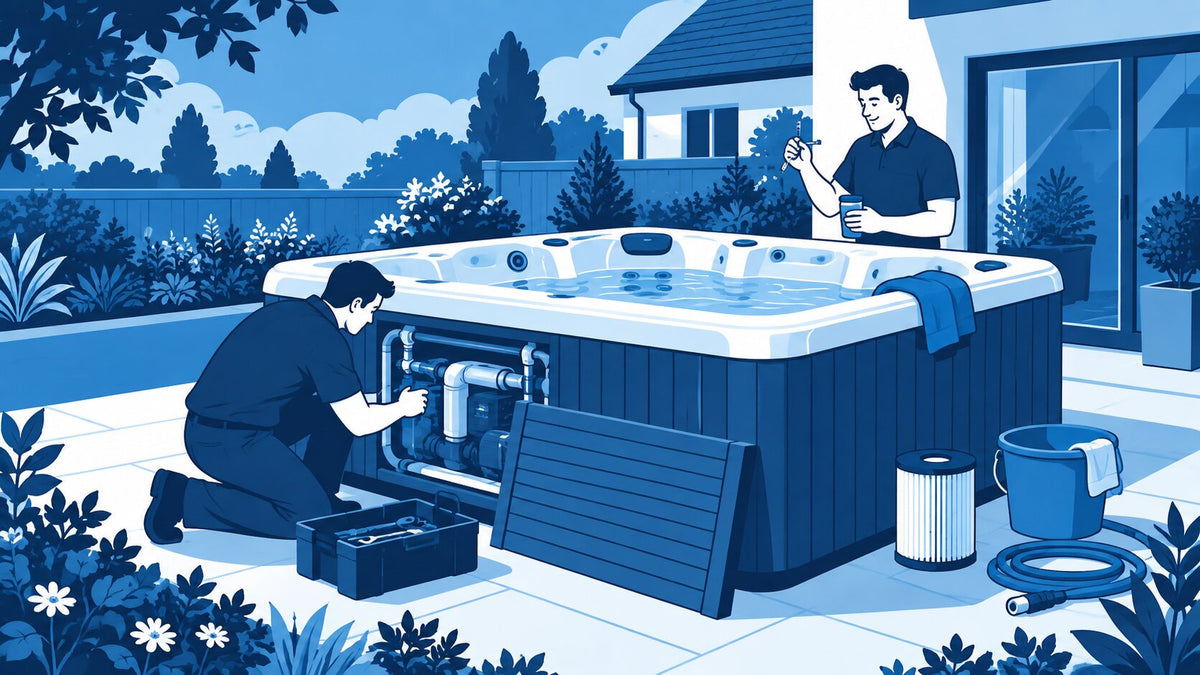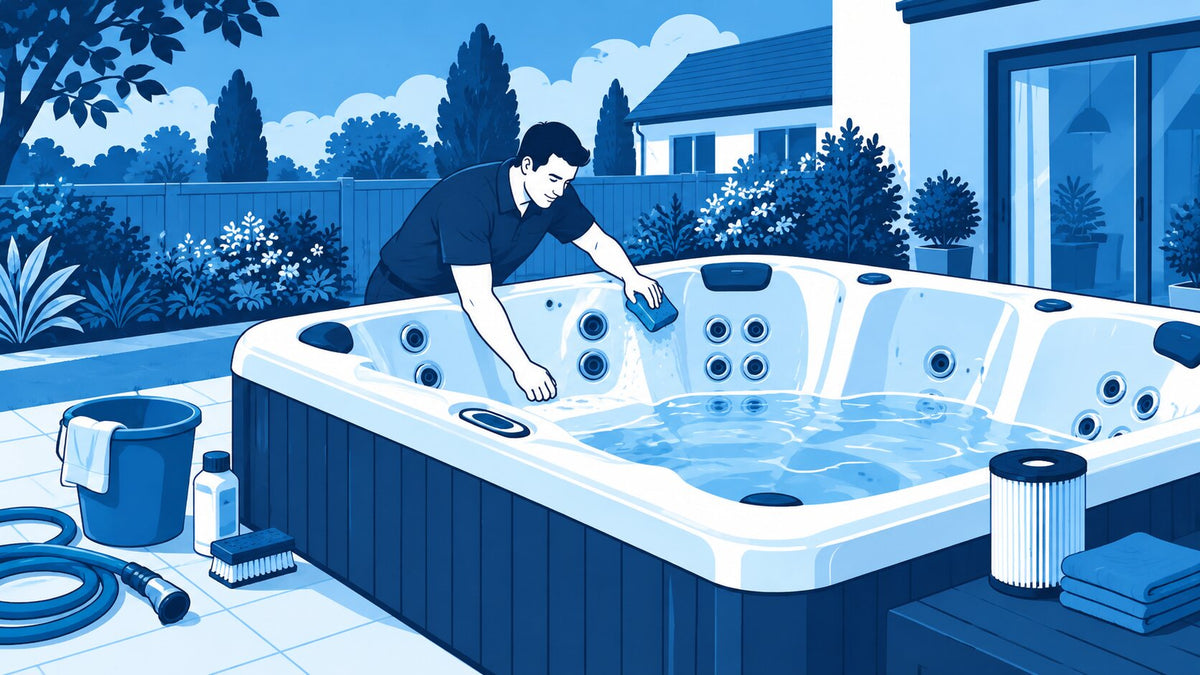
Cleaning a hot tub properly means doing more than wiping the seats and chucking fresh water back in. The shell matters, of course, but so do the filters, jets, cover and the pipework hidden behind the cabinet.
That doesn't mean every clean needs to become a Saturday-long engineering project. Most of the time, a sensible routine is enough. The key is knowing when your hot tub needs a quick tidy, when it needs a full drain and clean, and when the internal plumbing deserves some attention too.
Here's how to clean a hot tub properly, step by step.
What you'll need to clean a hot tub
Get everything together before you start. Once the water is halfway down the drain, discovering your filter cleaner is empty gets annoying fairly quickly.
Depending on the type of clean you're doing, you may need:
- A hot tub shell cleaner suitable for acrylic
- Soft microfibre cloths or non-abrasive sponges
- A garden hose
- A suitable hot tub filter cleaner
- A spa pipe or system flush product if you're flushing the plumbing
- A wet vacuum if you want to remove residual water
- Your normal water-testing kit or test strips
- Your usual hot tub water-treatment chemicals
Stick with products designed for hot tubs and follow the instructions on their labels. Household bathroom cleaners, washing-up liquid and other general-purpose products can leave residue behind, create foam or be unsuitable for acrylic surfaces.
The same applies to chemicals. Don't mix spa chemicals together, don't invent your own concentrations and don't assume that more product will clean better. Use each product as its manufacturer directs.
How often should you clean a hot tub?
There's a difference between keeping a hot tub clean and deep cleaning a hot tub.
Small jobs happen all the time. You might wipe the waterline, remove leaves or rinse a dirty filter without draining a single litre of water.
A full clean is different. That normally means draining the spa, cleaning the empty shell, dealing with the filters and then refilling it with fresh water.
Many domestic hot tubs need a full drain and refill every few months, but usage matters. A spa used most evenings by a family will put more demand on the water and filtration system than one used by two people at the weekend.
Don't clean by calendar alone. Water that's becoming difficult to manage, heavy foaming, stubborn residue or a hot tub that hasn't been drained for a long time may justify an earlier clean.
Step 1: Check the hot tub before you empty it
It sounds backwards, but the best time to decide what sort of clean your hot tub needs is while it still has water in it.
Look at the waterline. Check the filters. Run the pumps and pay attention to the jet pressure. Listen for sounds that weren't there before.
If the water has been easy to maintain and you're carrying out a routine water change, you may only need a normal drain and clean.
If the spa has been neglected, the water has persistent problems or you want to clean beyond the visible surfaces, this is the point to consider flushing the internal plumbing.
Step 2: Flush the pipework before draining, if needed
Your hot tub can look spotless while the plumbing is anything but.
Warm water constantly circulates through pipework hidden behind the shell. Oils, cosmetics and other organic residue can accumulate inside that system over time. You can't reach it with a sponge.
A hot tub system flush uses a specialist cleaning product that circulates through the plumbing while the spa still contains water. It helps loosen contamination inside areas that aren't accessible during normal cleaning.
Follow the instructions supplied with the system cleaner you're using. The amount required, circulation time and process can differ between products.
Once the treatment has completed its cycle, you can drain the dirty water away.
A system flush isn't necessarily required every time you change the water. It's a deeper-cleaning step and makes most sense when the pipework is due attention, the hot tub hasn't been thoroughly cleaned for some time or you're deliberately carrying out a more comprehensive clean.
Step 3: Switch the hot tub off and drain it
Before draining, switch off the hot tub as directed by its manufacturer. Don't leave pumps or heaters running as the water level falls.
Drain the spa using its built-in drain where fitted, or another method approved for your hot tub.
Think about where the water is going too. Hundreds or even thousands of litres released in the wrong place can make quite a mess, chemical treatment aside. Avoid sending water towards neighbouring property or somewhere it could cause damage.
Once the bulk of the water has drained, you'll probably still have some sitting in the footwell and seats. A wet vacuum makes short work of this, though it isn't essential for a routine home clean.
Step 4: Remove and clean the hot tub filters
Filters deserve more attention than a quick splash under the tap. They're constantly collecting debris from the water, so a dirty filter can affect both water quality and flow.
Remove the cartridges and start by rinsing loose debris from between the pleats with clean water. Work carefully around the whole filter rather than blasting one side for ten seconds and declaring victory.
If it needs a deeper clean, use a purpose-made filter-cleaning product according to its instructions. Some products are sprays, while others require the filter to soak.
Rinse the filter thoroughly afterwards so cleaning product doesn't end up back in the spa.
Avoid using washing-up liquid or household detergent. Leftover detergent is a very effective way of turning your hot tub into an accidental bubble bath once the jets come on.
Be cautious with pressure washers too. High pressure can damage the filter material. A normal garden hose gives you far more control.
When should you replace a hot tub filter instead?
Cleaning has its limits.
If the filter media is damaged, the pleats have started breaking down, the cartridge is badly distorted or it remains filthy after a proper clean, replacement may be the better option.
Check that any replacement is the correct type and size for your hot tub. Filters that look similar aren't necessarily interchangeable.
Step 5: Clean the empty hot tub shell
With the spa empty, you can finally get at the areas that are awkward to clean when it's full.
Use a cleaner suitable for your hot tub's acrylic surface and a soft cloth or non-abrasive sponge. Work around the seats, footwell, waterline and moulded areas around the jets.
Don't attack stubborn marks with an abrasive scourer. Acrylic can scratch, and a slightly annoying waterline mark is still preferable to a permanently scratched shell.
Pay particular attention to the old waterline. That's where oils, lotions and other residue tend to collect.
Once the shell is clean, remove any cleaner residue as directed by the product manufacturer. Anything you leave behind has a good chance of joining your new water when you refill.
Step 6: Clean around the jets
Jet fronts can collect residue too, especially around their edges.
Wipe around each accessible jet using your suitable shell-cleaning product and a soft cloth. Don't start dismantling jet assemblies unless the manufacturer says they're designed to be removed by the owner and you know the correct process.
This is a good example of where hot tub cleaning can drift into hot tub repair rather quickly. If a jet is damaged, loose or no longer operating correctly, cleaning it harder isn't the answer.
Step 7: Clean the headrests
Hot tub pillows and headrests live in a fairly punishing environment. They're exposed to warm water, chemicals, steam and whatever happens to be in someone's hair that day.
Clean them using the method recommended by your hot tub manufacturer. If they're removable, taking them out can make it easier to clean both the headrest and the acrylic behind it.
Look for cracking, swelling or other signs of deterioration while you're there.
Step 8: Give the cover some attention
The cover is easy to ignore because it isn't technically inside the hot tub. It still spends its entire life protecting it.
Remove dirt and debris from the outer surface and clean it with a product suitable for the cover material. Check the underside too, as this sits directly above the warm water.
Look over the seams, handles and securing straps while you're cleaning.
If the cover has become unusually heavy, badly damaged or waterlogged, cleaning won't restore its insulating properties. That's a condition problem rather than a dirt problem.
Step 9: Clean the cabinet
Next, move to the outside of the spa.
Most modern hot tubs use composite or synthetic cabinetry that's fairly easy to clean. Wipe away dirt using a suitable cleaner and soft cloth, following the manufacturer's care guidance for the material.
A clean cabinet does more than make the hot tub look presentable. Dirt can hide marks, damage and evidence of small leaks that you'd otherwise spot sooner.
Step 10: Inspect the hot tub while it's empty
An empty, clean hot tub gives you a rare chance to see everything clearly.
Take a few minutes to look over the shell for cracks, unusual marks or signs of deterioration. Check around accessible jets and fittings.
If you can safely see into the equipment area without removing electrical covers or dismantling components, look for obvious signs of water where it shouldn't be.
Don't start taking apart pumps, heaters or electrical control equipment as part of a normal cleaning session. If something looks wrong, that's the point to stop and investigate properly rather than turning a clean into an improvised repair.
Step 11: Refit the filters and prepare to refill
Before reaching for the hose, make sure everything you removed during cleaning is back where it belongs.
Check that the drain is properly closed. Refit clean filters or replacement cartridges. Make sure headrests and any other owner-removable parts are installed correctly.
Then refill the spa according to the manufacturer's instructions.
That last bit matters more than it sounds. Some hot tubs recommend filling through the filter compartment or a particular inlet to help reduce the chance of trapping air in the plumbing.
Step 12: Refill with fresh water
Use clean mains water unless your hot tub manufacturer specifies another suitable source.
Keep an eye on the spa while it fills. This isn't the moment to put the hose in, wander off for lunch and remember it two hours later.
Fill to the level recommended by the manufacturer. Too little water can affect operation, while filling above the intended level achieves nothing except giving the garden some of it back once everyone gets in.
Step 13: Restart the hot tub and check circulation
Once the hot tub is correctly filled, restart it according to its instructions.
Check that the pumps begin circulating water correctly and that the jets operate as expected. Watch for error messages and listen for unusual sounds.
If a pump runs but fails to move water properly after a drain and refill, it may have trapped air. This is commonly described as an airlock.
Follow the manufacturer's priming procedure rather than repeatedly running a pump without proper water flow.
Step 14: Treat and balance the fresh water
Fresh-looking water still needs treating before you settle back into the seats.
Test the water and add your normal hot tub chemicals according to their instructions. The exact process depends on the sanitiser and water-care system you use.
Give the treatment time to circulate and make sure the water is within the appropriate ranges before bathing.
Don't guess quantities and don't mix chemical products together. HSE guidance on chemical disinfection stresses following manufacturer instructions for concentration and contact time, while incompatible chemicals can react dangerously when combined.
What about cloudy water?
Sometimes a hot tub doesn't look dirty in the traditional sense. Instead, the water turns hazy or cloudy.
That can have several causes, including water balance, insufficient sanitiser, dirty filters, heavy use and contaminants introduced by bathers.
Don't assume the solution is simply more chlorine or bromine. Test the water first, inspect the filters and consider how long the current water has been in the spa.
If normal treatment isn't bringing the water back under control, a drain and fresh refill may make more sense than repeatedly adding products to tired water.
Why does a hot tub foam when the jets come on?
We've all seen it. The water looks fine until the pumps start, then suddenly you're sitting in something that resembles a bath from a shampoo advert.
Foam often comes from contaminants in the water. Body oils, moisturisers, cosmetics, detergents left in swimwear and cleaning-product residue can all contribute.
A small amount of foam treatment may suppress the symptom, but persistent foam deserves a little more thought. Check your water, filters and cleaning routine. If the water is old or heavily contaminated, replacing it may be the cleaner solution.
This is also why rinsing shell cleaners and filter-cleaning products thoroughly matters.
Can you clean a hot tub with household cleaning products?
As a general rule, stick with products intended for hot tubs and compatible with the surface you're cleaning.
Acrylic shells, filters, covers and internal plumbing all have different requirements. A product being brilliant at cleaning a kitchen worktop doesn't automatically make it a good choice for your spa.
Household detergents are particularly troublesome because residue can cause foaming after the refill.
Can you clean a hot tub without draining it?
You can certainly maintain one without draining it.
Wiping the waterline, removing debris, cleaning the cover and dealing with filters can all form part of normal maintenance while the spa remains full.
A proper shell clean is different. If you want access to the seats, footwell and surfaces below the waterline, you'll eventually need to drain it.
Cleaning hidden plumbing with a system flush also normally happens immediately before a drain, because the treatment loosens material that you don't want to leave circulating in your fresh water.
Deep cleaning vs routine cleaning... what's the difference?
A routine clean keeps on top of what you can see. A deeper clean deals with more of what you can't.
For a lightly used, well-maintained spa, regular filter care, sensible water management and periodic drain-and-clean cycles may keep things straightforward.
A deeper clean can include a chemical system flush, more detailed cleaning around jets and headrests, treatment of the cover and closer inspection while the spa is empty.
Biofilm is another consideration. It can develop on surfaces within wet plumbing systems, which is one reason simply polishing the acrylic isn't the same thing as cleaning the whole water system.

When is professional hot tub cleaning and servicing worthwhile?
There's plenty an owner can do. In fact, routine owner maintenance is what keeps a hot tub pleasant between professional visits.
A professional service goes further than a normal DIY clean because the engineer can inspect components and accessible plumbing at the same time.
Our hot tub servicing packages start from £249 and include cleaning alongside checks of key parts of the spa. Depending on the package, this can include draining and refilling, filter cleaning, inspections of pumps, the heater, circulation pump, accessible pipework and plumbing joints, plus a service report.
Our Gold and Platinum services also include a complete chemical system flush, inspection of jets and headrests, cleaning of the jet fronts, acrylic inspection and treatment of the hot tub cover. Platinum adds our chlorine dioxide super-shock bio treatment.
For most owners, we'd recommend professional servicing at least once a year alongside the routine cleaning and water care you carry out yourself.
Cleaning a hot tub that's been left unused
A spa that's been sitting untouched for months deserves a little more caution than one you emptied last Tuesday.
Start by looking at how it was stored. Was it left full? Was it properly drained? Has water been sitting in the plumbing? Are there signs of leaks or frost damage?
If stagnant water has been left in the spa or pipework, don't treat it as a normal quick refill. The condition of the water system needs to be considered before the hot tub goes back into use.
If it was correctly winterised and stored dry, bringing it back should be much more straightforward. Inspect it, clean it, refit the necessary parts, refill and restart it according to the manufacturer's instructions.
Cleaning a second-hand hot tub
If you've bought a used hot tub, we'd start from scratch rather than inheriting the previous owner's maintenance routine.
Ideally, see the spa running before it's moved so you know its basic condition. Once transported and installed, a thorough clean, filter check and fresh fill give you a known starting point.
Think about the internal plumbing too. You can clean an empty second-hand shell until it gleams, but that tells you very little about the history of the water that previously circulated behind it.
If you've bought a spa that needs collecting from another property, our hot tub relocation service covers moving hot tubs between properties across the UK. Servicing can also be booked as part of a relocation, which can be a convenient point to give a used spa some attention before it settles into its new home.
What if cleaning won't save it?
Most dirty hot tubs need a clean. Some old hot tubs need a decision.
If a spa has severe structural damage, major faults or has deteriorated to the point where you no longer want to maintain it, spending another afternoon scrubbing the shell isn't going to change the bigger picture.
For unwanted or broken spas that have reached the end of their useful life, our hot tub disposal service provides collection and removal across the UK.
That's obviously the last resort. A grubby hot tub isn't a dead hot tub. But there comes a point where cleaning, repairing and continuing to own it are three separate decisions.
Common hot tub cleaning mistakes
Most cleaning mistakes are fairly innocent. They're also easy to avoid once you know what causes trouble.
- Using washing-up liquid or household detergent. Residue can create large amounts of foam once the jets run.
- Cleaning only the visible acrylic. Filters and internal plumbing are part of the water system too.
- Using abrasive pads on the shell. They can leave permanent scratches.
- Forgetting to switch the hot tub off before draining. Pumps and heaters shouldn't be allowed to operate without the correct water level.
- Refilling before rinsing away cleaning products. Whatever is left on the shell can end up in the new water.
- Ignoring dirty filters. Fresh water passing through filthy cartridges rather spoils the fresh-start idea.
- Mixing spa chemicals. Follow each product's instructions and keep chemicals separate.
- Assuming every problem is dirt. Low flow, heating issues, leaks and error codes can indicate faults rather than a need for more cleaning.
Hot tub cleaning FAQs
What is the best thing to clean a hot tub with?
Use products specifically intended for hot tubs and suitable for the surface you're cleaning. For an acrylic shell, use an acrylic-safe spa cleaner with a soft cloth or non-abrasive sponge. Filters should be cleaned with a suitable filter-cleaning product.
Can I use washing-up liquid to clean my hot tub?
We wouldn't recommend it. Detergent residue can remain on the shell and create foam when the hot tub is refilled and the jets are switched on.
Can I use bleach to clean a hot tub?
Don't improvise with household bleach or mix cleaning chemicals. Use products approved for the job and follow your hot tub and chemical manufacturers' instructions. Different chemicals can react when combined.
How often should I deep clean my hot tub?
There's no single interval for every household. Many owners combine a thorough shell clean with their periodic drain and refill, often every few months. Heavy use, persistent water problems or a neglected spa may justify cleaning sooner.
Should I clean my hot tub filters every time I drain it?
It's a sensible time to clean them. Putting dirty filters straight back into a freshly cleaned spa defeats some of the purpose. Filters also need attention between water changes depending on use and condition.
Should I flush the pipes every time I clean my hot tub?
Not necessarily. A chemical system flush is a deeper-cleaning step rather than something every spa needs with every routine water change. How often it's useful depends on usage, condition and the maintenance history of the hot tub.
How long after cleaning a hot tub can you use it?
Wait until the spa has been refilled, restarted and brought back to the correct operating temperature, and make sure the water chemistry is within the appropriate range for your sanitiser system before bathing.
Can I pressure wash hot tub filters?
We'd stick with a garden hose unless the filter manufacturer specifically recommends otherwise. High-pressure water can damage filter media.
Why is my hot tub still cloudy after cleaning it?
Cloudy water isn't always caused by a dirty shell. Check the water chemistry, sanitiser level, filtration and circulation. If the problem continues, the cause may need further investigation.
Can I clean a hot tub myself?
Yes. Routine shell cleaning, water care and filter maintenance are normal ownership jobs. Professional servicing becomes useful when you want a more comprehensive clean alongside inspection of pumps, heaters, plumbing and other components.
How to clean a hot tub properly without making it a huge job
The easiest hot tub to clean is the one that's been looked after between deep cleans.
Keep an eye on the waterline. Rinse and clean the filters before they're completely clogged. Deal with cloudy water and foam rather than leaving them to get worse. Then, when it's time for a full drain, clean and refill, you're maintaining the spa rather than rescuing it.
When you do give it a proper clean, work methodically. Deal with the pipework first if you're flushing it, drain the water, clean the filters and surfaces, inspect what you can while the spa is empty, then refill and restart it correctly.
It doesn't need to be complicated. Clean what you can see, don't forget what you can't, and know when a problem has moved beyond cleaning into something that needs proper attention.