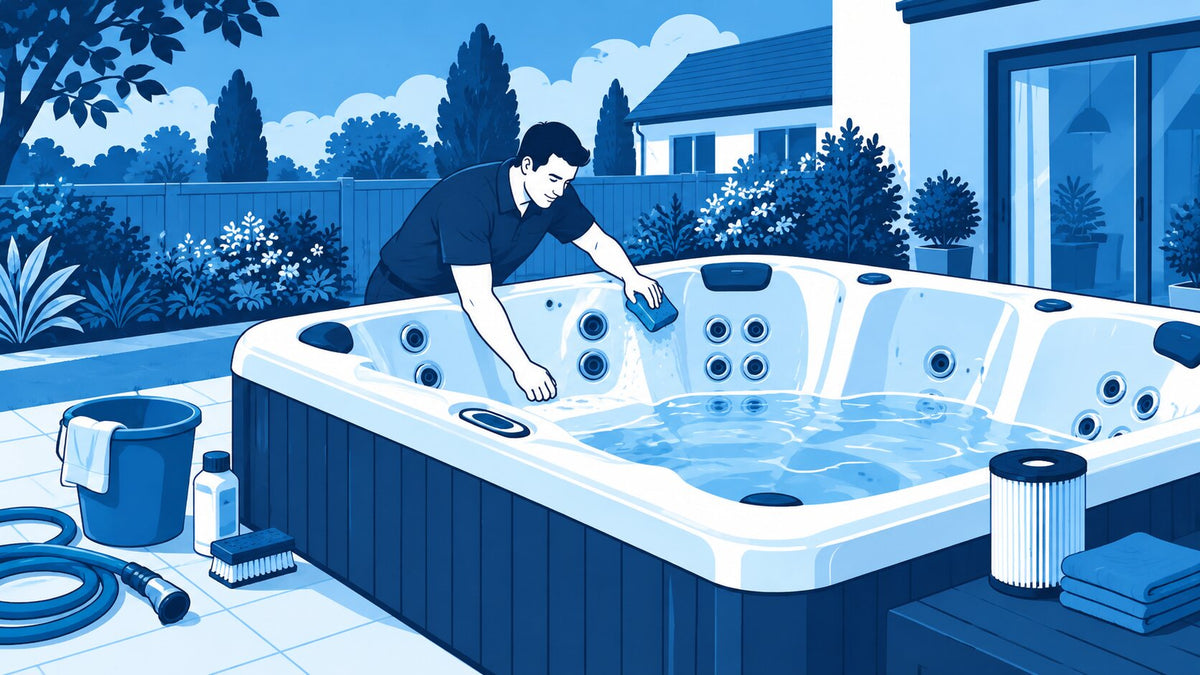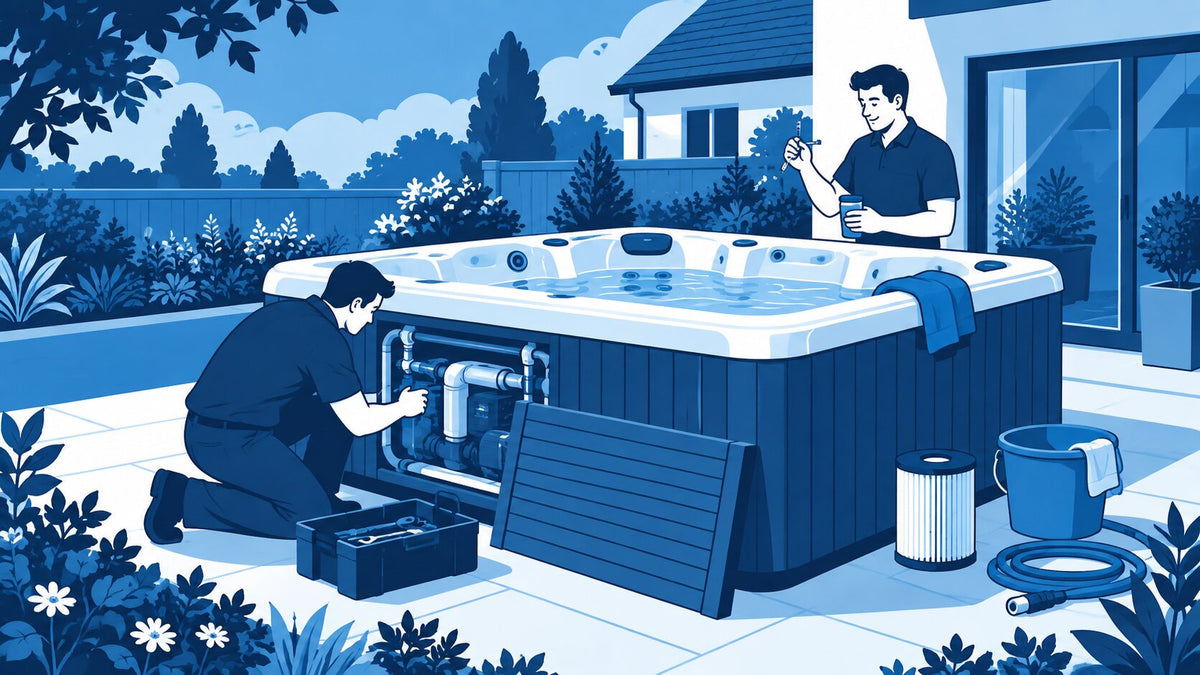
No one buys a hot tub because they want another weekend chore. The good news is that hot tub maintenance doesn't need to take over your life. A few small jobs done often will keep the water easier to manage, the filters working well and the spa in better shape.
The trick is consistency. Leave everything for months, then try to fix cloudy water, clogged filters and a grimy waterline in one go, and it becomes a much bigger job. Keep on top of the basics and most maintenance is quick.
This guide covers the routine jobs most hot tub owners need to think about, from water care and filters to draining, cleaning, winter shutdowns and professional servicing. Always follow the instructions supplied with your own hot tub and the chemicals you use, as systems and products vary.

Hot tub maintenance... what actually needs doing?
Hot tub maintenance falls into four main areas: water care, filtration, cleaning and mechanical checks. Some jobs take a couple of minutes. Others only need doing every few months or once a year.
A sensible routine looks something like this:
| When | What to check or do |
|---|---|
| Before use and regularly through the week | Check water clarity, test the water and adjust it in line with your chemical manufacturer's instructions. |
| Weekly | Check the waterline, remove debris, inspect the cover and give the filters a visual check. |
| Every few weeks | Rinse or clean filters as needed, depending on use and water condition. |
| Every few months | Drain and refill when needed, clean the shell and inspect the spa while it's empty. |
| At least annually | Consider a professional service so key components, pipework and seals can be checked as well as the spa being thoroughly cleaned. |
These timings are a guide, not a rulebook. A hot tub used by two people twice a week will have a very different workload from one used every night by a family. Water quality, bather load, weather and the type of sanitiser you use all affect the maintenance schedule.
Water care... the job that makes everything else easier
Clear water isn't always clean water, so don't rely on appearance alone. Hot tub water needs the right balance of sanitiser and pH to stay pleasant and safe to use.
Test the water often, especially before bathing. Follow the target ranges given by your hot tub and chemical manufacturer, then make small corrections rather than throwing in large amounts of product and hoping for the best.
You'll normally be keeping an eye on:
- Sanitiser, such as chlorine or bromine, which helps control bacteria and other unwanted organisms.
- pH, which affects water comfort and how well your sanitiser works.
- Total alkalinity, which helps keep pH stable.
If the readings are off, correct them using the instructions on the product you're using. Don't guess at doses. Hot tubs hold far less water than swimming pools, so a small amount of chemical can make a noticeable difference.
Never mix different spa chemicals together. Add and store them exactly as the label says, keep them dry and secure, and keep them away from children and pets. Some pool and spa chemicals can react dangerously when mixed.
If you run a hot tub as part of a business, such as a holiday let, the rules and risk controls are different from normal private domestic use. HSE guidance for business-use spa pools covers water treatment, monitoring, cleaning and the control of infectious agents such as legionella.
Cloudy water, foam and strange smells... don't just add more chemical
When water starts looking tired, the temptation is to keep adding sanitiser. Sometimes that's part of the answer, but not always.
Cloudiness can come from dirty filters, poor water balance, heavy use, dissolved contaminants or water that has simply been in the spa too long. Foam may come from detergents, cosmetics, body oils or other residues carried into the water.
Start with the basics. Test the water, check the filters and think about how long the water has been in the spa. If the water is difficult to recover, a drain, clean and fresh refill may be quicker than spending days chasing the chemistry.
A quick shower before using the hot tub helps too. It sounds almost too simple, but less deodorant, moisturiser, make-up and laundry detergent entering the water means less work for the filters and sanitiser.
Filters: small part, big workload
Your filters spend their life catching the stuff you don't want floating around the hot tub. When they become clogged, water flow can suffer and the rest of the system has to work harder.
Remove the filters and inspect them regularly. Rinse loose debris from between the pleats with clean water and use a suitable filter-cleaning product when they need a deeper clean. Follow the filter and cleaner manufacturer's instructions.
A garden hose is usually enough for routine rinsing. Avoid attacking the filter with a pressure washer unless the manufacturer specifically says it's safe. Too much pressure can damage the filter media, which rather defeats the point.
Filters don't last forever. If the pleats are damaged, the material stays dirty after cleaning, or the filter has lost its shape, replacement may make more sense than another soak and rinse.
Cleaning the shell and waterline
Even well-balanced hot tub water leaves some cleaning behind. Body oils, cosmetics and other residues tend to collect around the waterline, especially when the spa gets plenty of use.
Use products designed for hot tub acrylic rather than grabbing the strongest household cleaner under the kitchen sink. Harsh or unsuitable cleaners can damage surfaces or leave residues that cause foam when the spa is refilled.
When the hot tub is empty, work from the top down. Wipe the shell, seats, footwell and areas around the jets. Remove any residue, then rinse as directed by the cleaning product before refilling.
Pay attention to the headrests too. They sit in a warm, chemically treated environment and can show wear over time. Clean them using the method recommended by the spa manufacturer.
Don't forget the cover and cabinet
The hot tub itself gets most of the attention, but the cover does a lot of work. It keeps debris out and helps hold heat in, especially through a cold British winter.
Wipe dirt and standing water away, keep the surface clean and check for damage. A cover that has become heavy, waterlogged or badly damaged won't perform like a healthy one.
Give the cabinet a clean at the same time. Plastic and composite cabinets are usually simple to maintain, but use a product suited to the material. If your spa has another type of cabinet, follow its care instructions.
When should you drain and refill a hot tub?
There isn't one perfect drain interval for every owner. Heavy use means the water becomes harder to manage sooner, while lighter use may let you go longer between changes.
As a broad guide, many owners drain and refill every few months. Your own water condition, usage and manufacturer's guidance should decide the timing.
Consider a fresh fill sooner if the water has become difficult to balance, stays cloudy despite normal treatment, foams heavily or has been neglected for a while.
Before draining, think about where the water is going. Don't release chemically treated water somewhere it could damage plants, property or neighbouring land. Allow sanitiser levels to fall where appropriate and follow any local guidance that applies.
Pipework matters, even though you can't see it
Cleaning the shiny acrylic is only half the story. Your hot tub also contains metres of internal plumbing that carries warm water every time the pumps run.
Residue can build up inside that hidden pipework. This is why a proper system flush can be useful before a drain and refill. A spa flush product circulates through the plumbing to help loosen contamination that a cloth will never reach.
Use a product designed for hot tub pipework and follow its directions carefully. The usual process is to circulate the treatment before draining, but the exact dose and run time depend on the product.
For owners who want a deeper clean, this is also one of the main differences between a basic drain-and-clean routine and a more thorough professional service.
Jets, pumps and heaters... what can an owner actually check?
You don't need to become a hot tub engineer to spot when something has changed.
Pay attention to how the spa sounds and feels. Jet pressure that suddenly drops, a pump that sounds different, water appearing around the base of the cabinet, recurring error messages or a spa that struggles to heat are all worth investigating.
Some causes are simple. A dirty filter can restrict flow, for example. Others sit inside the equipment bay and need proper diagnosis.
Don't remove electrical covers or start dismantling pumps, heaters or control systems unless you're competent to do so. Water and mains electricity are not a pairing for guesswork. If you suspect an electrical fault, stop using the spa and get suitable professional help.

Professional servicing: what DIY maintenance doesn't cover
Routine owner maintenance and professional servicing aren't competing ideas. You need both for different reasons.
Your weekly jobs keep the water, filters and visible surfaces under control. A service goes further by giving an engineer the chance to inspect parts of the spa you don't normally look at.
Our hot tub servicing packages can include draining and refilling, shell and cabinet cleaning, filter cleaning, visual checks of pumps, the heater, pipework, plumbing unions, the circulation pump and topside controls, plus a service report. Gold and Platinum packages add further cleaning and inspection work, while Platinum includes our chlorine dioxide bio treatment.
We recommend having a hot tub professionally serviced at least once a year. If the spa gets heavy use, has recurring water issues or hasn't been looked at for a long time, it may make sense to deal with it sooner.
How to make hot tub maintenance less of a chore
You know what? Most hot tub maintenance problems start when lots of small jobs get ignored at once.
Keep your test kit or strips somewhere easy to reach. Rinse filters before they're filthy. Wipe the waterline when you first notice it, not six weeks later. Keep spa chemicals together in a dry, secure place so you know what you have.
A few other habits help:
- Shower before using the spa where practical.
- Keep the cover on when the hot tub isn't in use.
- Remove leaves and debris before they break down in the water.
- Deal with unusual noises, leaks and error messages rather than hoping they disappear.
- Keep a note of filter cleans, water changes and servicing dates.
None of that is glamorous. Neither is cleaning the lint filter in a tumble dryer, but both jobs save hassle later.
Hot tub maintenance through winter
Cold weather gives you a choice: keep the hot tub running or shut it down properly.
If you're going to use it through winter, keep the water treated, maintain normal circulation and make sure the cover is in good condition. A well-fitting cover helps reduce heat loss and keeps winter debris out.
If you're not going to use the spa for a long period, don't simply drain the visible water and switch it off. Water can remain inside pumps and pipework. If that water freezes, it expands and can damage components or plumbing.
A proper winter shutdown needs the spa and pipework to be drained correctly. This is one area where doing half a job can be worse than leaving the spa running.
Restarting a hot tub after a long break
A hot tub that's been empty for months deserves more than a hosepipe and a flick of the power switch.
Check the shell, cabinet, cover and accessible equipment for obvious damage. Make sure drain fittings are closed, the filters are clean and everything that was disconnected for the shutdown has been put back correctly.
Refill the spa as the manufacturer directs, then restart it and check for leaks, correct circulation and normal operation. Treat and balance the fresh water before bathing.
If the hot tub has been sitting unused and you're unsure how it was shut down, a professional restart and health check can take some of the uncertainty out of bringing it back into use.
Moving house, buying used or saying goodbye to an old spa
Maintenance sometimes overlaps with the bigger moments in hot tub ownership.
If you're moving house or buying a second-hand spa, the move creates a useful chance to clean and inspect it while it's empty. Our hot tub relocation service covers collection, transport and reinstallation, with set-up packages available if you'd like the spa prepared for use at the new location.
Second-hand hot tubs deserve a little extra caution. Ask how long the spa has been empty, whether it was drained correctly, when it last ran and whether there are known faults. Once installed, a thorough clean and fresh water fill gives you a much better starting point than inheriting someone else's mystery water chemistry.
There also comes a point when maintenance no longer makes sense. A badly damaged, unwanted or uneconomical spa may be better removed altogether. If that time comes, our hot tub disposal service covers professional removal of unwanted and broken hot tubs across the UK.
Common hot tub maintenance mistakes
Most owners don't ruin a hot tub with one dramatic mistake. It's usually a string of small ones.
- Only treating the water when it looks cloudy. Water needs routine testing, not visual guesswork.
- Adding more chemical without testing first. More isn't automatically better.
- Ignoring dirty filters. Poor filtration can affect water clarity and flow.
- Using household cleaners on the shell. Residues can cause foam and unsuitable products may damage surfaces.
- Forgetting the pipework. A spotless shell doesn't mean the internal plumbing is clean.
- Ignoring a small leak or new noise. Changes are worth checking while they're still small.
- Draining for winter without clearing the plumbing. Residual water can freeze in cold weather.
Hot tub maintenance FAQs
How often should I maintain my hot tub?
Some maintenance is ongoing. Water should be checked regularly, filters need routine cleaning, and the shell and waterline should be kept clean. A full drain and refill is usually needed every few months, depending on use and water condition. We also recommend a professional service at least once a year.
How often should I clean my hot tub filter?
Check the filter regularly and clean it when debris starts to build up. The exact frequency depends on how often the spa is used, the number of bathers and the filter type. Follow the filter manufacturer's care instructions.
How often should hot tub water be changed?
Many domestic hot tubs are drained and refilled every few months, but there isn't a single interval that suits every spa. Heavy use, water balance problems and contamination can mean changing it sooner. Follow your hot tub manufacturer's guidance.
Can I maintain a hot tub myself?
Yes. Owners can handle much of the routine work, including water testing, basic chemical treatment, filter cleaning and visible surface cleaning. Mechanical, electrical or persistent water-quality problems may need professional attention.
Does a hot tub need servicing every year?
We recommend professional servicing at least once a year. It gives an engineer a chance to inspect key components and accessible plumbing while carrying out the cleaning and checks included in the chosen service package.
What happens if I don't maintain my hot tub?
Water can become difficult to manage, filters can clog, surfaces and pipework can become dirty and small faults may go unnoticed. Regular care makes the spa easier to own and gives you a better chance of spotting problems early.
Hot tub maintenance is easier when you keep it routine
Good hot tub maintenance isn't about spending every Sunday armed with test strips and a scrubbing brush. It's about doing small jobs at the right time.
Keep the water balanced, look after the filters, clean the visible surfaces, change the water when it needs it and pay attention when the spa starts behaving differently. Add a proper annual service and you'll have a much clearer picture of what's happening behind the cabinet as well as what you can see in the water.
That routine keeps ownership simple. Which, really, is the point. The hot tub is supposed to be the relaxing bit.